
Authentic Assessment and PBL?! I'm sold.
- Emma Jean

- Nov 9, 2018
- 5 min read
Updated: Nov 22, 2018
This year, one of my major goals was to develop assessments that would force my students to transfer their knowledge in creative ways.
The Problem: In precalculus last year my students were able to do well on their pass-offs for each standards and then, since the unit tests looked just like a stack of 5 pass-offs, they did well on the unit tests too. Later in the year, when I gave them a challenging problem that didn't say "Standard 5" at the top, they had no idea what to do. They were not able to combine the skills from more than one standard and they were not able to identify which skill to use on their own. In my AP Stats class, constrained by time and the AP curriculum we focused on solving AP style problems. These are challenging an interesting problems from a mathematical perspective but I felt like I was cheating my students by not showing them how amazing statistics can be as a tool for analyzing the world around us.
The Solution: I'm trying to address these issues separately in each class. In Precalculus, while the basic structure of my class has stayed the same (learn, practice, take a pass-off at your own pace) I have worked really hard to craft unit assessments that require students to combine many skills at once and be creative in their solutions. My first unit "test" came from this three act math: http://www.101qs.com/2859-circlesquare
The students were asked to try to plan a solution for the problem in small groups. The solution would require them to come up with functions from geometric information (standard 1), graph those functions (standard 2), restrict the domain of the graphs (standard 5), and look for the intersection of the two graphs (standard 6). I didn't tell them which standards to use, just simply reminded them of what the standards explored in the unit were. At the end of the problem solving, each student wrote up their solution to the problem. More importantly, they wrote reflections about which standards they used and in which parts of their solutions. The students definitely struggled with such a difficult task. They were uncomfortable being "tested" with such a challenging problem, but, in the end, they all learned so much and were genuinely proud of what they accomplished. At the end of the whole process, I even had a student say, "wait, that was the test?!"

In Stats, no longer confined by the AP timeline I am having a ton of fun being more flexible in my planning. EVERYTHING is project based. I wouldn't call it full on PBL because the projects have a great deal of structure and scaffolding built in but MAN has it been fun. What's more important is that students that traditionally haven't seen themselves as mathematicians are now telling me that stats is their favorite class!!!
Our theme is "How to use statistics to spot fake news." Every Monday is "Media Monday" in which we study a statistic from the news, learn to calculate it, analyze it and interpret it in context. The rest of the time we work with real data, mostly found on ProPublica. They use that data to achieve each of the standards for the course.
In our first project students chose from a three different data sets. I asked them to choose their data based on interest in content rather than perception of which might be easiest to work with. Each week we used smaller data sets to practice a particular concept or standard and then on Fridays they applied that concept to their big data set. Here are a few examples of student work.


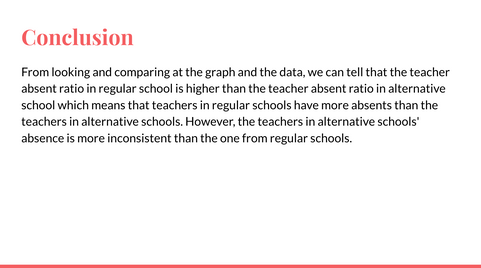

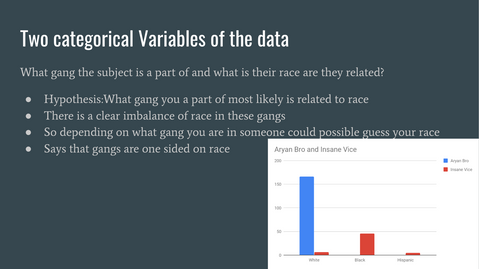


We are currently working on a collaborative project with the psychology class. Both classes have standards which address observational studies, survey studies and experiments. In the process, students learn about different sampling methods, the purpose of randomness, different types of bias and more. When I taught these concepts in the past, it felt like a lot of definitions. Now, the students are arriving at the concepts as they grapple with the planning for the projects.
The prompt for the project is
Task
What would you like to learn about the state of elementary education today? You will have the opportunity to explore some of these issues through an observational study and through a survey. You will have one day to observe classes in a local elementary school. You will gather analyzable data on variables of your choosing. Over the next two weeks, you will collectively plan for this day of observations and plan a survey that collects similar data. After the data are collected you will analyze it with the hope of answering your research questions. After analyzing your data you will prepare a presentation to the principal/administrative team at the elementary school. You must only report OBJECTIVE findings. Do not mention specific teachers and do not give suggestions for improvement; just “here’s what the data tell us.”
They collaborated using google docs to brainstorm and plan the project.





Here's an example of the grappling they have faced. We developed a really involved spreadsheet for observing our classes. Upon looking at all the variables they needed to observe, the students felt overwhelmed.

They didn’t feel able to observe all the variables for all 22 students in the classroom that they would be sitting in. This led to a conversation about randomness. Some of the students wanted to choose the ten most interesting students to observe. "That type of sample is called 'biased'". Others wanted to choose five boys and five girls. "That type of sample is called 'stratified'" Others still wanted to focus on just two tables of five in order to get their ten subjects. That type of sample is called a 'cluster sample'”. Usually, I simply define these concepts but this time around, the students presented them as ideas for how they might sample and I was able to tell them, “great suggestion! That type of sample actually has a name!”


I had also never been sold on the idea of an “authentic audience” for a project. I always thought that the work during the project is the meaningful bit. This project taught me about the power of an authentic audience. Because my students knew they would be working with real subjects and knew they would be presenting their findings to a group of adults, they worked so much harder on their plans. They felt the fire in terms of deadlines because we had a set observation day that they needed to be prepared for.


My students are even working outside of class on their analysis! It's Thanksgiving break and I had a student email me to ask me to look over her updated work.
PBL, you've got me. I'm never turning back.

Comments