
Graduate Learner Outcomes
- Emma Jean

- Apr 17, 2018
- 2 min read
Updated: Jun 3, 2018
One of my roles at Wasatch is to lead the Authentic Assessment committee. This is really fulfilling work and it seems like we have made a real difference at the school. Our committee wrote the school assessment policy. We created a Habits of Work Rubric to allow us to remove judgment of effort, timeliness, etc. from academic grades. We built a system that would allow struggle students to take ownership of their missing work by creating their own action plans and many other smaller projects.
I am really proud of the work I've done with this committee and I'm looking forward to our next project.
As a school we voted on a set of "Graduate Learner Outcomes". These are similar to the 21st century skills that you see everywhere but they are slightly tweaked. Our set of learner outcomes are:

Critical thinking and problem solving
Collaboration across networks and leading by example
Agility and adaptability
Initiative and entrepreneurship
Accessing and analyzing information
Effective oral and written multimedia communication
Curiosity and imagination
Global Responsibility
Environmental Stewardship
While we claim to want our students to have all of these skills by the time they graduate, we have not developed a way to assess this and actually hold students accountable for acquiring these skills. In comes the Authentic Assessment Committee! I'm sure that all good teachers understand that the first step toward authentic assessment is to make your expectations clear. That is what we are currently working on with these outcomes.

Our first step was to create a google doc in which we each chose a graduate learner outcome. We looked at how other schools were defining these and wrote notes and provided links of examples within the doc.
During today's meeting, I printed copies of all these notes for each group member. We quickly went around and shared the most salient features of the graduate learner outcome that we researched. The goal of this share out was to minimize the overlap in the definitions of each outcome.
Next we paired up with someone else and as a team tried to answer the following two questions:
1. Provide the key skills required to achieve this outcome (2-5 bullet points)
2. Provide 3-4 concrete examples of artifacts that a student might produce during their time at Wasatch which would demonstrate that she attained these skills.
This led to great discussions and even more productive brainstorming. Here are a few examples:

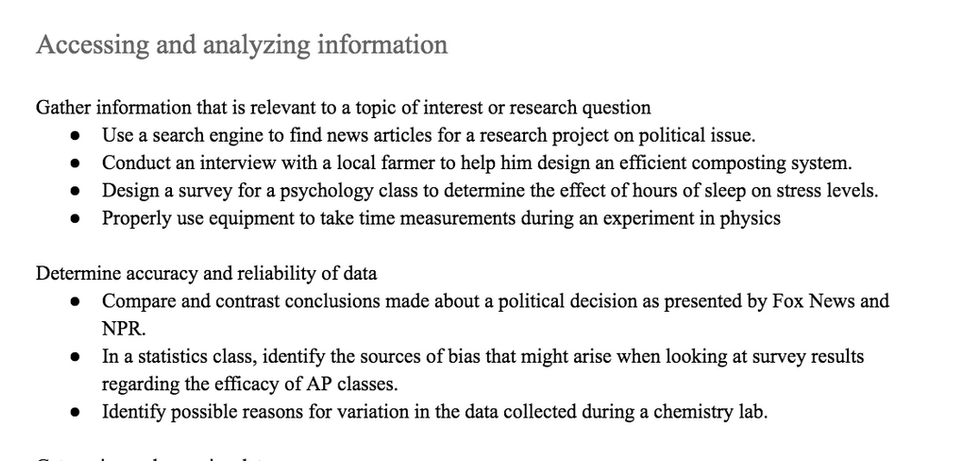


Eventually, our goal for the school is to have students produce e-portfolios. They will curate the artifacts that they put into the portfolios to demonstrate their mastery. Our work here will help give them ideas for items they could include.
Today's meeting was fun because it truly felt like a work session. It felt like the style of lesson that I might plan for my high scool students.
All too often, professional development is not differentiated. Teachers are not given the opportunity to work together and actually get things done. We simply listen to announcements or have unproductive whole group arguments/conversations. We are mostly in agreement that this isn't best for students so why do we subject teachers to it?
Let's make grown-up meetings just as fun and engaging as our lessons! Let's differentiate for the adults we work with!

Comments